


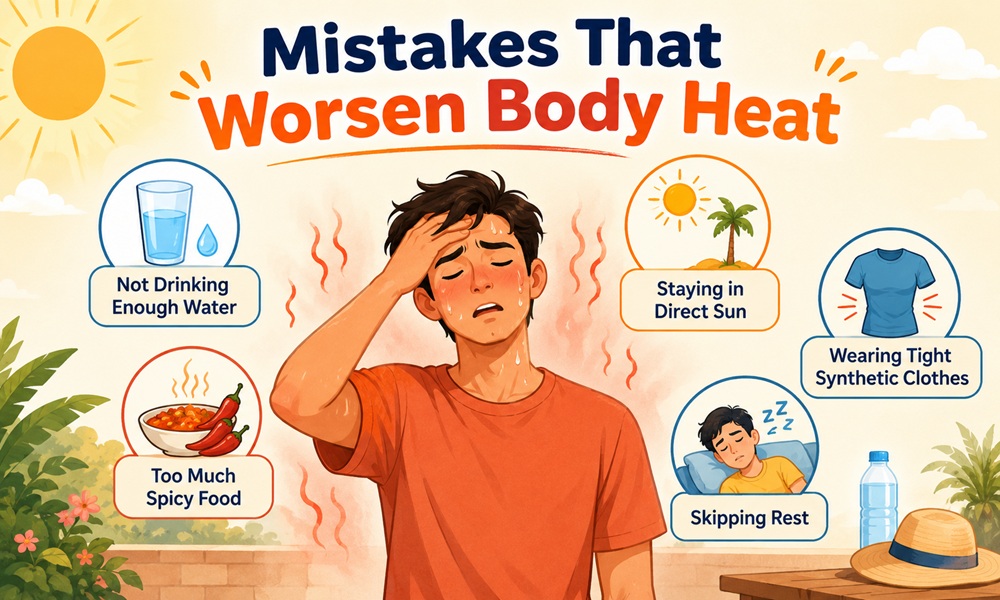
Sometimes you feel hot from the inside even when the weather is mild, with symptoms like flushing, acidity, irritability, broken sleep and excessive sweating. Often it’s everyday habits driving that internal heat up. Here are the mistakes that make body heat worse, and what to do instead.
Mistakes that raise your internal heat
- Loading up on spicy and fried food: heavy, oily and very spicy meals take more energy to digest and can leave you feeling hotter, particularly in humid conditions where the sweat they trigger can’t evaporate.
- Too much red meat and heavy protein: dense, slow-digesting foods raise the metabolic heat your body generates while breaking them down.
- Excess caffeine and alcohol: both can dehydrate you and disturb your body’s temperature balance.
- Not drinking enough water: water is your body’s natural coolant. Skimp on it and you can’t sweat and dissipate heat efficiently.
- Wearing tight, synthetic clothes: snug nylon and polyester trap heat against the skin and block airflow.
- Going out at peak sun: heavy activity or long exposure between late morning and mid-afternoon piles external heat onto your system.
- Hot, long showers and intense midday workouts: both spike core temperature when you’re trying to cool down.
What to do instead: cooling swaps
| Avoid (heat-raising) | Choose (cooling) |
| Spicy, fried, oily meals | Light meals with cucumber, melon, leafy greens |
| Sugary sodas and excess caffeine | Water, coconut water, buttermilk, herbal teas |
| Heavy red meat | Lighter proteins, lentils, yoghurt |
| Tight synthetic clothing | Loose, light-coloured cotton or linen |
| Hot shower after heat | Cool (not freezing) shower; cool feet soak |
| Midday outdoor exertion | Early-morning or evening activity |
A nuance on spicy food: in dry heat, the sweat it triggers can actually cool you as it evaporates. In humid weather, that sweat just lingers and leaves you hotter, so the climate matters.
Simple cooling habits that work
- Drink water steadily and add water-rich fruits like watermelon, pomegranate and oranges.
- Cool your pulse points: wrists, neck, inner elbows and feet, where blood runs close to the skin.
- Try a few minutes of slow, cooling breathing to calm the system; many find rolling the tongue and inhaling slowly (a yogic cooling breath) settles internal heat.
- Keep the bedroom airy with light cotton bedding so your temperature can drop for sleep.
- Manage stress, which itself stokes internal heat.
When body heat needs a doctor
Why you feel hot inside when it isn’t that hot
“Body heat” isn’t a single thing. Your core temperature is tightly controlled, so what most people describe is a mix of sensations: flushing, acidity, restlessness and heavy sweating. Several everyday drivers feed it. Digesting large, rich meals generates real metabolic heat. Dehydration limits sweating, your main cooling tool. Stress hormones raise heart rate and warmth. And poor sleep blunts the body’s natural overnight temperature dip.
In traditional systems like Ayurveda this is often described as excess “pitta,” and the remedies overlap neatly with the science: lighter meals, cooling foods, more water and calmer routines. You don’t need to pick a framework; the practical steps are the same.
Frequently asked questions
Does drinking cold water actually lower body heat?
Cool water helps you rehydrate and feel refreshed, which supports your body’s own cooling through sweat. But ice-cold drinks aren’t magic, and gulping very cold water when overheated can feel jarring. Steady sips of cool (not freezing) water work best.
Can certain foods really increase body heat?
Indirectly, yes. Heavy, spicy, fried and high-protein foods take more energy to digest and can leave you feeling warmer, especially in humid weather where sweat can’t evaporate. Light, water-rich foods feel cooling by contrast and are easier on digestion.
Why do I feel hotter at night?
Late, heavy dinners, alcohol, a warm room and stress all interfere with the natural drop in body temperature that should happen before sleep. A lighter early dinner, an airy room and breathable cotton bedding usually help.
Which drinks help cool the body fastest?
Plain water comes first, but coconut water, buttermilk (chaas), and cooling herbal infusions like mint or fennel water replace fluid and minerals while feeling refreshing. Skip alcohol, very sugary sodas and excess caffeine, which dehydrate and can leave you hotter.
Is feeling hot all the time a sign of something serious?
Usually it’s lifestyle, but constant overheating with a real fever, a racing heart, unexplained weight loss or heavy sweating can point to an overactive thyroid, infection or hormonal change, and should be checked.
Most internal heat responds to hydration, lighter food and cooler habits. But persistent overheating, especially with a measurable fever, a racing heart, unexplained weight loss or constant sweating, can signal an infection, hormonal change or an overactive thyroid, and deserves medical review. And true heat exhaustion or heatstroke, with confusion, very high temperature or fainting, is an emergency.
