


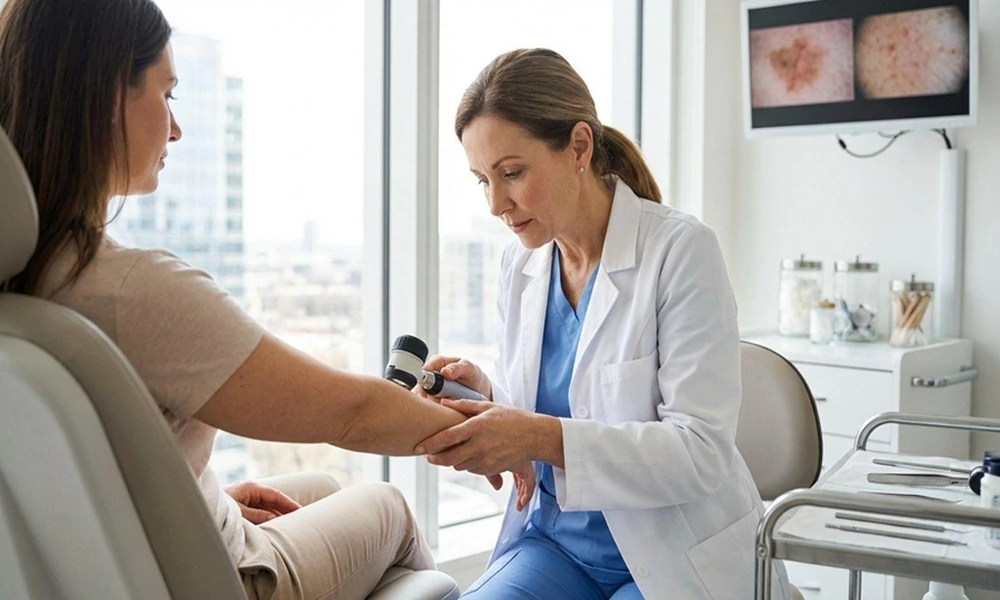
Your skin can reveal changes long before they become uncomfortable or interfere with daily life. A new spot, persistent redness, or an unusual patch of dryness may seem unimportant at first. While many skin changes are harmless, others deserve attention from a qualified medical professional.
Understanding what to watch for can help you make informed decisions without becoming unnecessarily worried about every blemish. Here are seven skin changes worth paying attention to, along with practical steps for responding appropriately.
1. A Mole That Changes in Appearance
Moles are common, and most remain harmless throughout life. However, changes in an existing mole can sometimes indicate a problem that requires medical evaluation.
Dermatologists often recommend the ABCDE approach when examining suspicious spots:
- Asymmetry: One half looks different from the other.
- Border: The edges appear irregular or poorly defined.
- Color: Multiple colors or uneven pigmentation develop.
- Diameter: The spot is larger than approximately six millimeters, although concerning lesions can be smaller.
- Evolving: The mole changes in size, shape, color, or appearance.
A mole that starts itching, bleeding, or changing deserves prompt professional assessment. Avoid trying to diagnose suspicious growths using photographs or online comparisons alone.
2. Acne That Persists Despite Regular Skincare
Occasional breakouts are common, but persistent acne can affect comfort, confidence, and skin health.
If breakouts continue despite a consistent skincare routine, the problem may require more than another over-the-counter cleanser.
Different types of acne respond to different treatments. Some people experience clogged pores and small blemishes, while others develop deeper, painful inflammatory lesions.
Repeatedly switching products or combining strong active ingredients can irritate the skin and make it harder to evaluate what’s helping.
A dermatologist can assess the type and severity of acne and recommend appropriate treatment. Seeking advice is particularly important when acne causes pain, scarring, or noticeable changes in pigmentation.
3. Redness That Keeps Returning
Temporary facial redness can occur after exercise, exposure to heat, or skin irritation. However, redness that repeatedly appears or remains for extended periods deserves closer attention.
Conditions such as rosacea, contact dermatitis, and eczema can produce redness, although their underlying causes and treatment approaches differ.
Notice whether your symptoms develop after using certain products, spending time outdoors, or experiencing changes in temperature.
Keeping a simple record of possible triggers may help a healthcare professional better understand the pattern.
Avoid assuming that persistent redness is simply sensitive skin. Identifying its cause is often more useful than repeatedly covering it with cosmetics or experimenting with new treatments.
4. A Skin Growth or Sore That Doesn’t Heal
A blemish that remains unchanged for weeks, repeatedly bleeds, crusts over, or appears to heal before returning should not automatically be dismissed.
Some skin cancers can resemble ordinary pimples, irritated patches, or small growths. Not every persistent lesion is dangerous, but appearance alone is not a reliable way to determine its significance.
For residents researching local care, a search for dermatologist Westchester county can be a starting point for finding medical dermatology services that include mole assessments, skin examinations, and evaluation of suspicious lesions.
When choosing a provider, focus on appropriate qualifications, the services available, and whether the practice can evaluate your specific concern.
If you notice an unexplained growth or a sore that fails to heal, arrange an assessment rather than waiting indefinitely for it to disappear.
5. Dry, Itchy, or Scaly Patches That Keep Coming Back
Dry skin is often associated with seasonal weather, bathing habits, and environmental conditions. However, recurring patches of irritated skin may indicate an underlying inflammatory condition.
Eczema and psoriasis, for example, can cause uncomfortable skin changes that interfere with sleep, daily activities, or overall well-being.
Scratching can further irritate affected areas, while unsuitable skincare products may worsen discomfort.
Gentle cleansing, regular moisturizing, and avoiding known irritants can support skin comfort. Nevertheless, persistent symptoms require an accurate diagnosis.
Professional treatment may help control inflammation and establish a practical long-term management routine.
6. Unexpected Hair Loss or Scalp Changes
Hair shedding is a normal biological process, but sudden thinning, distinct bald patches, or scalp inflammation may point to an underlying condition.
Possible contributing factors include hereditary hair loss, autoimmune conditions, scalp disorders, and certain medical or nutritional issues.
Itching, scaling, redness, or tenderness alongside hair loss can provide important clues.
Because different causes require different approaches, self-treating with multiple hair-growth products may delay appropriate care.
A dermatologist can examine the scalp, review relevant symptoms, and determine whether additional testing or targeted treatment is appropriate.
Early evaluation can be particularly valuable when hair loss develops rapidly or occurs with significant scalp discomfort.
7. Changes in Your Nails or Skin Pigmentation
Skin health involves more than the face, arms, and legs. Changes affecting nails and pigmentation also deserve attention.
Nails that become unusually thick, discolored, brittle, or separated from the nail bed may reflect injury, infection, or other medical conditions.
Similarly, dark patches, unexplained light areas, or rapidly changing pigmentation can have several possible causes.
A new or changing dark streak beneath a nail is especially important to have assessed.
Rather than relying on cosmetic treatments to disguise unfamiliar changes, consider whether a professional examination could clarify their cause.
Conclusion
Healthy skin care involves noticing meaningful changes, responding thoughtfully, and knowing when professional guidance is appropriate.
Not every new spot, rash, or blemish signals a serious medical problem. However, persistent symptoms, changing moles, unexplained growths, and unusual changes in the hair or nails should not be ignored.
Pay attention to patterns, keep your skincare routine gentle, and document changes when appropriate. If something looks unusual, worsens, or fails to improve, seeking qualified medical advice can help you understand what is happening and determine the next steps.
Being attentive to your skin is not about achieving perfection. It is about making informed decisions that support your long-term health.
